Ka Ekalesia a nā Aliʻi
“The Chiefs’ Church”
“Ua hoʻonoho paʻa ʻo Iēhova i kona noho aliʻi ma ka lani; A noho aliʻi hoʻi kona aupuni ma luna o nā mea a pau.
(Halelū 103:19)
”The Lord has established his throne in heaven, and his kingdom rules over all.”
(Psalm 103:19 NIV)
“E mililani aku nā aliʻi a pau o ka honua iā ʻoe, e Iēhova, Iā lākou e lohe ai i nā hua ʻōlelo a kou waha.”
(Halelū 138: 4)
“All the kings of the earth shall praise thee, O Lord, when they hear the words of thy mouth.”
(Psalm 138:4 KJV)
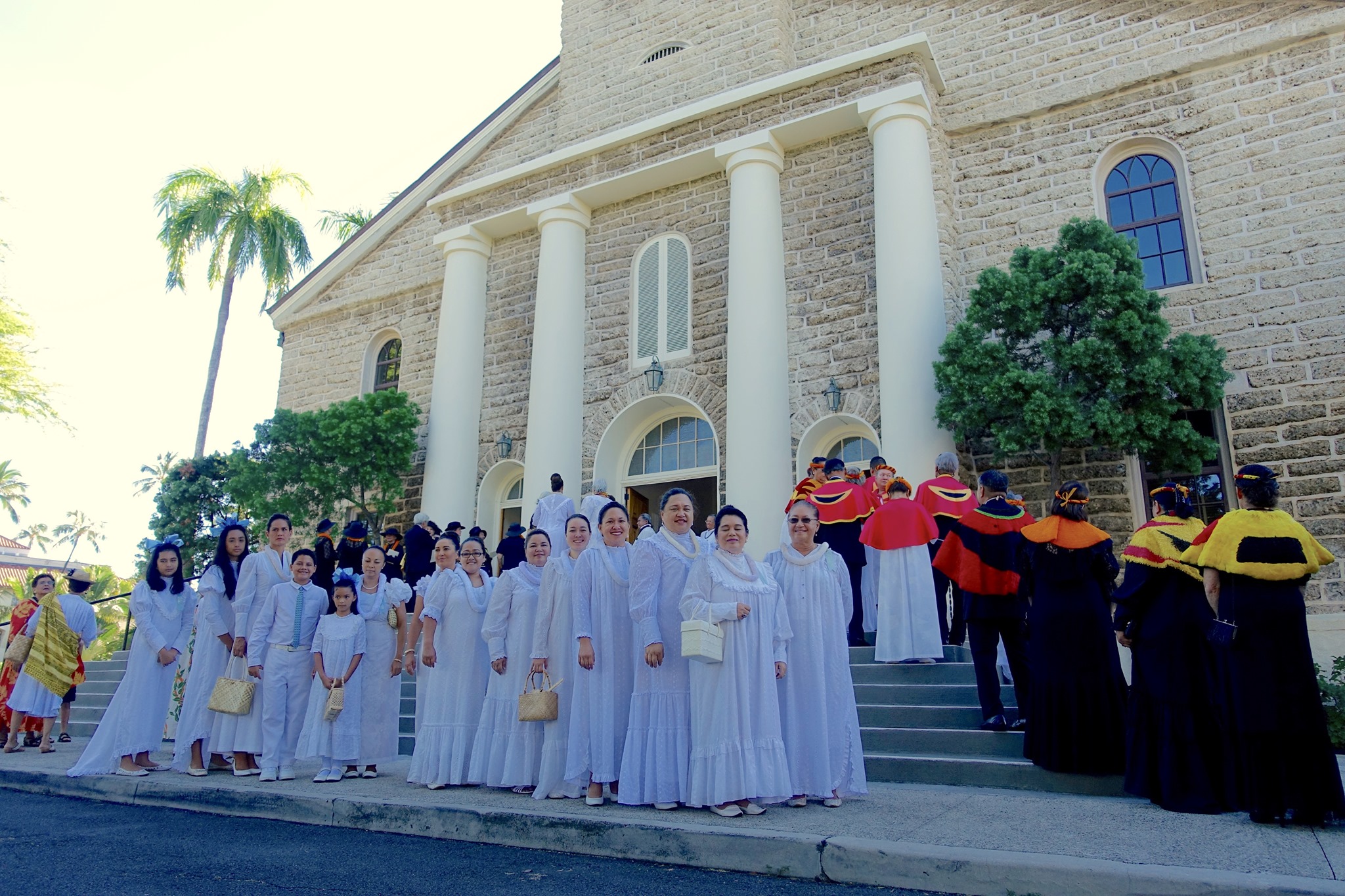
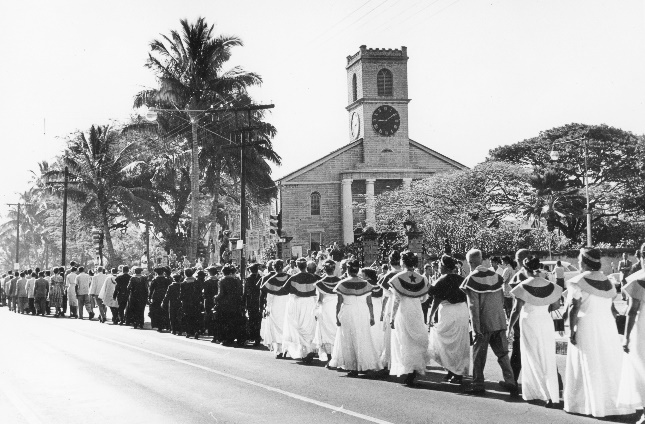
Kawaiahaʻo Church, also known as the Aliʻi Church, served as the site for many of the landmark events of the Hawaiian Kingdom. The church was the site for most baptisms, marriages and funerals of the ruling aliʻi, governmental affairs, constitutional conventions and concerts. The aliʻi played a pivotal role in influencing the people to embrace the Christian teaching and way of life.
“Who were the ones who hoped for a Christian Nation in Hawaiʻi and whose faith founded Kawaiahaʻo Church? American missionaries of course but the real founders were Hawaiian men and women who heard the Word, read the Word and welcomed it as “a lamp unto their feet”! Stone Church, Albertine Loomis
MŌʻĪ KAMEHAMEHA I (1758-1819)
Reigned 1795-1819
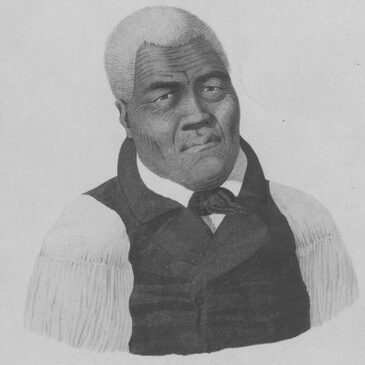
Kalani Paiʻea Wohi o Kalekini Kealiʻikui Kamehameha o ʻIolani Kaiwikapu kauʻi Ka Liholiho Kūnuiākea
By 1795 Mōʻī Kamehameha is the first aliʻi to have united the majority of the Hawaiian islands into a political entity. (The marriage of Kaʻahumanu & King Kaumualiʻi of Kauaʻi & Niʻihau fully unites the Hawaiian Kingdom in 1822.)
He is the first Aliʻi to be advised by foreigners including British John Young, Welsh Isaac Davis and Spaniard Francisco Marin. He is credited with adopting western concepts and leadership style into his conquest and rule of the Hawaiian Islands.
On his death bed, he decreed the abolition of the traditional practices of mourning a high aliʻi through human sacrifices and body mutilations.
MŌʻĪ WAHINE KEŌPŪOLANI (1780-1823)
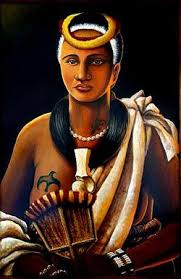
Mōʻī Wahine Keōpūolani, was aliʻi kapu of nī ʻaupiʻo, the most sacred and highest ranking spiritual and political Aliʻi by birth, even highter than husband Mōʻī Kamehameha I. She was the daughter of Aliʻi Nui, wife of Mōʻī Kamehameha I, mother of nā Mōʻī Kamehameha II (Liholiho) and Kamehameha III (Kauikeaouli). The influence of her role in the acceptance of Christianity by the people of the Hawaiian Kingdom is often overlooked. It was Keōpūolani who officially welcomed the missionaries and quickly recognized them as teachers and desired them to teach her and her children.
With the arrival of the Second Missionary Company in 1823 in Honolulu, Mōʻī Wahine Keōpūolani returned to Lahaina, capital of the Hawaiian Kingdom, accompanied by Reverends Williams Richards and Charles Stewart along with Betsey Stockton. With her support, the Lahaina Mission Church is established with the dedication of a house of worship on August 24, 1823. A few months later, Keōpūolani was baptised upon her death bed. She is buried on the grounds of Waineʻe (now known as Waiola) Congregational Church in Lahaina, Maui.
“The word of God is a true word, a good word. Jehova is a Good God. I love him, and love Jesus Christ. I have no desire for the former gods of Hawaii. They are all false. But I Love Jesus Christ. I have given myself to him to be his.”
Quote by Mōʻī Wahine Keōpūolani recalled by Rev. William Richards
MŌʻĪ WAHINE KAʻAHUMANU (1772 – 1832)
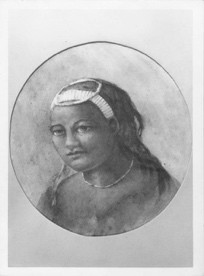
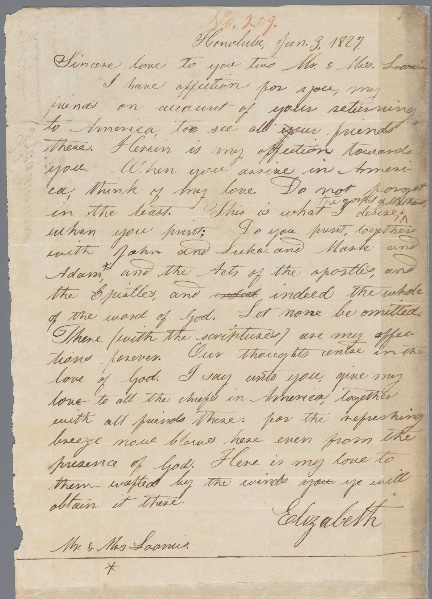
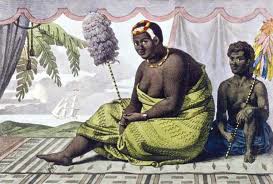
Mōʻī Wahine Kaʻahumanu, was the favorite wife of Mōʻī Kamehameha I. She was politically powerful and influential in shaping Hawaiʻi’s history. At the passing of Kamehameha I, she became the Kuhina Nui (Regent) and ruled the Hawaiian Kingdom along with Liholiho (Kamehameha II) and later, Kauikeaouli (Kamehameha III). Her political influence in Hawaiʻi cannot be understated. It was she who granted them permission to stay in the islands to carry on their work.
She developed a deep relationship with the first minister of Kawaiahaʻo Church Hiram Bingham I and his wife Sybil Bingham. She spent much time with the first company of missionaries and was eager to learn the Bible and by 1825 was able to read and write in both Hawaiian and English.
She was one of the first eight aliʻi converts of Kawaiahaʻo Church, baptized by Pastor Bingham on December 4, 1825. She led many others to the Christian faith and was a dominant influence in the spread of Christianity in the Hawaiian Kingdom.
MŌʻĪ KAMEHAMEHA II (1796–1824)
Reigned 1819-1824
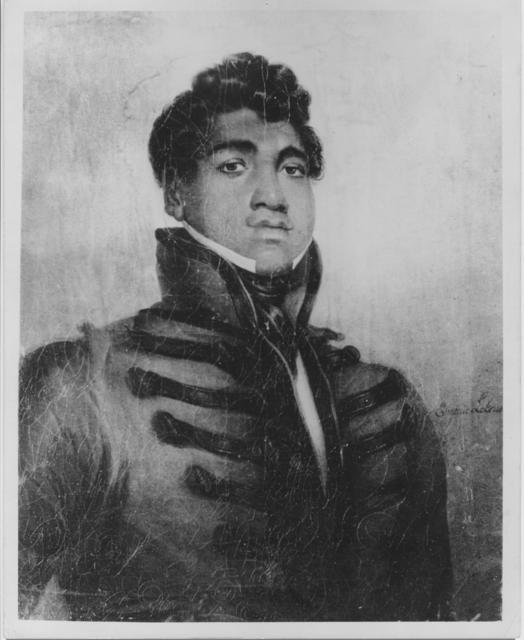
Kalaninui kua Liholiho i ke kapu ʻIolani, is known as Liholiho or Mōʻī Kamehameha II. He ruled the islands together with stepmother Kuhina Nui Mōʻī Wahine Kaʻahumanu. Mōʻī Kamehameha II is known for breaking of the kapu system six months into his reign. This was done when he sat to eat a meal with Mōʻī Wahine Kaʻahumanu and his mother Mōʻī Wahine Keōpūolani known as the breaking of the ʻai kapu. It led to the dismantling of old religious practices.
He was the first Hawaiian Mōʻī to travel outside the Kingdom of Hawaiʻi to Brazil and England with his wife Kamāmalu (c. 1802 – 1824) and Aliʻi Chief Boki, Governor of Oʻahu. While in England waiting to meet King George IV, Liholiho and Kamāmalu, contracted measles and died in July 1824 in London. Aliʻi Chiefs Boki and Kalanimoku, and other Hawaiian delegates departed in August 1824 on the Royal Navy Frigate HMS Blonde, with the caskets of the King and Queen, and returned to Hawaii in May 1825. Their funeral was held at Kawaiahaʻo Church which was draped black in mourning.
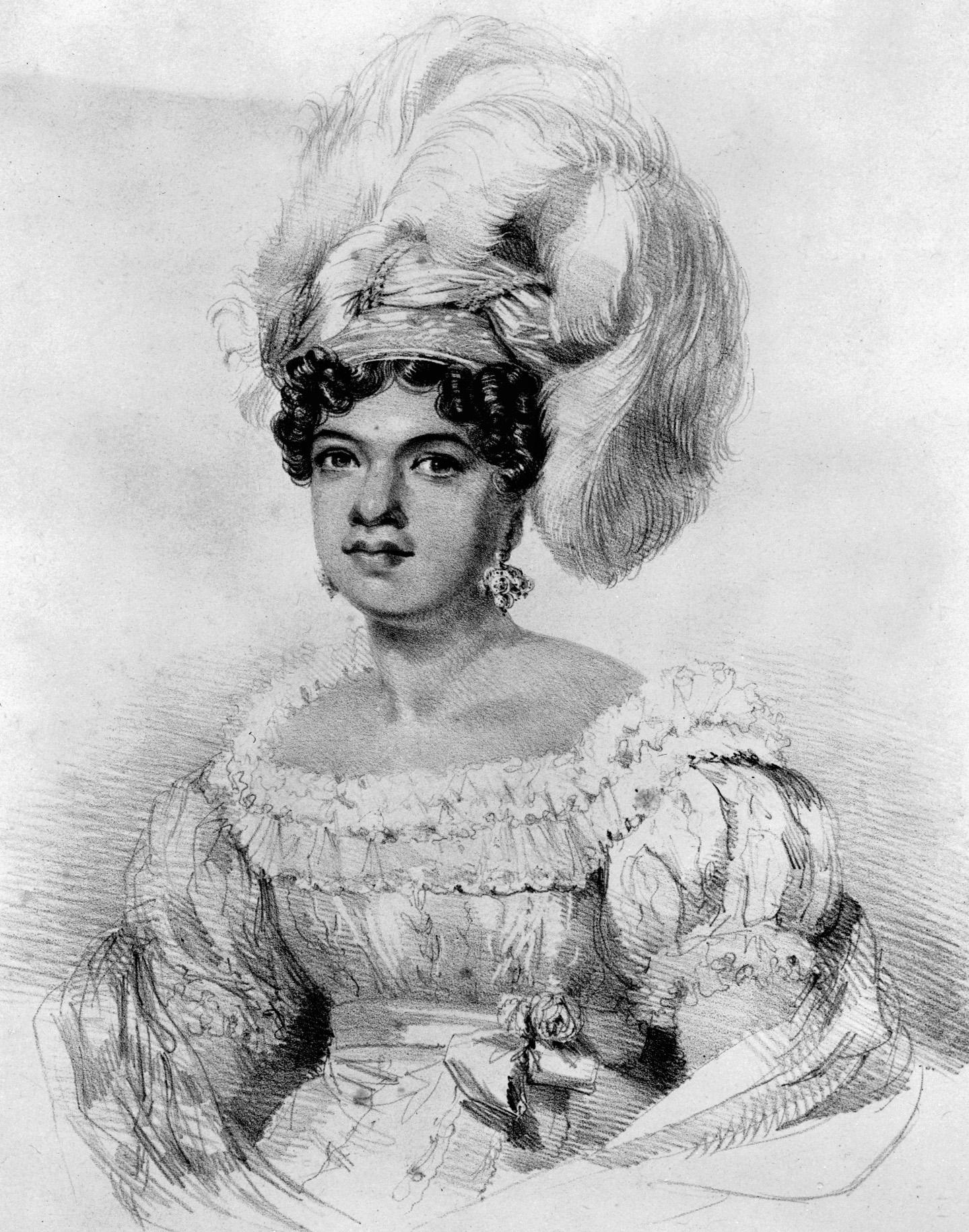
MŌʻĪ KAMEHAMEHA III (1813-1854)
Reigned 1825-1854
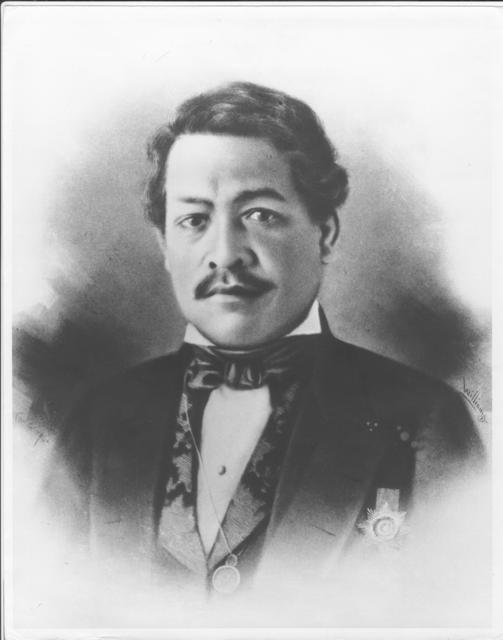
Keaweaweʻula Kīwalaʻō Kauikeaouli Kaleiopapa, also known as Mōʻī Kauikeaouli began his reign of the Kingdom of Hawaiʻi at age 12, ruling with Mō`ī Wahine Kaʻahumanu (until age 18). He was married to Mō`ī Wahine Kalama (1817-1870), and they were hānai (adopted) parents to several children including Alexander Liholiho known as Mōʻī Kamehameha IV.
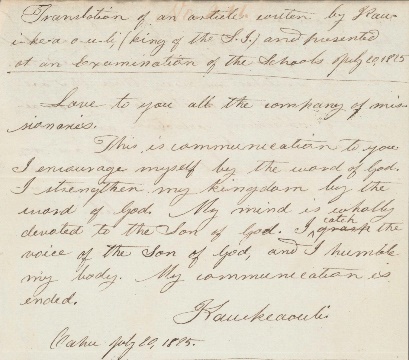
As a young prince, he was one of the first aliʻi to be introduced to the Christian religion and schooled to read and write in ʻŌlelo Hawaiʻi and English. He deeded the land upon which the church now stands. His works to support Kawaiahaʻo Church and the mission effort were instrumental to the rapid success of the spread of Christianity in Hawaiʻi.
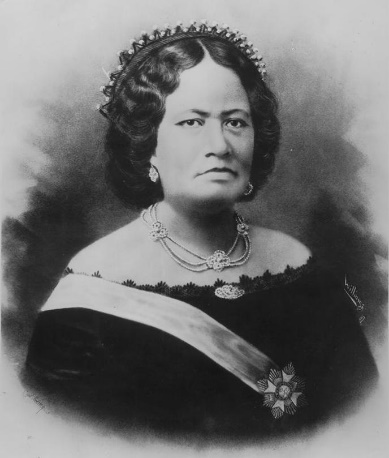
The Chiefs’ Children’s School (later known as The Royal School) was founded in 1839 at the behest of the King. It was intended to educate the children of the Aliʻi. Among the 16 students that the King selected for schooling, were the next five ruling monarchs.
Under his reign, Hawaiʻi evolved from an absolute monarchy to a constitutional monarchy with the signing of both the 1840 Constitution and the 1852 Constitution.
On July 31, 1843 on the steps of Kawaiahaʻo Church, Mōʻi Kamehameha III (Kauikeaouli) celebrated before a vast audience the restoration, Lā Hoʻihoʻi ʻEa, of the Hawaiian Kingdom (after it was seized by Lord George Paulet and returned by Admiral Thomas of England). Mōʻī Kamehameha III first proclaimed these words: “Ua mau ke ea o ka aina I ka pono,” (“The life of the land is perpetuated in righteousness.”), which served as the motto for the Hawaiian Kingdom, and continues to be so for the State of Hawaiʻi.
In 1848 the Legislature assembly was convened at the church by Mō`ī Kamehameha III (Kauikeaouli).
December 15, 1854, Mō`ī Kamehameha III (Kauikeaouli) lay in state at Kawaiaha`o Church, and services were held at `Iolani Palace.
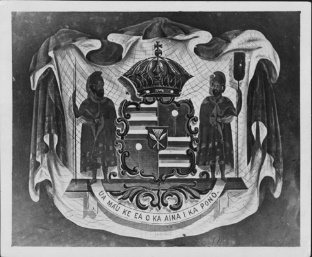
KE ALIʻI BERNICE PAUAHI PĀKĪ BISHOP
(1831-1884)
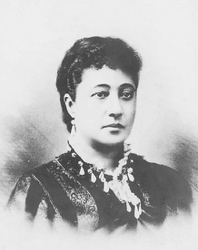
Pauahi was the great-granddaughter of Kamehameha I. Educated at the Chiefs’ Children’s School, she was an active and life-long member at Kawaiahaʻo Church, serving as a Sunday School teacher and Choir Director. Pauahi was a significant benefactor to the church during her life and through her will. She was asked by her cousin Kamehameha V to be heir to the Hawaiian throne, she refused so that she could better serve her people.
Pauahi’s Christian foundation was a major influence in her establishment of the Kamehameha Schools to benefit the keiki of Hawaiʻi. The princess knew that education would be key to the survival of her Hawaiian people. “In an enduring act of aloha, she left a precious gift” of her entire estate, the largest private estate in all of Hawaiʻi. Today, Kamehameha Schools has campuses on ʻOahu, Maui, and Hawaiʻi Island and continues to serve Hawaiian children and the community.
The long-standing close relationship between the Kamehameha Schools Bishop Estate, the Charles Reed Bishop Estate, and Kawaiahaʻo Church continues to the present.
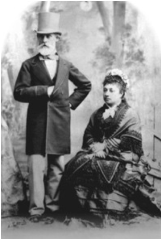
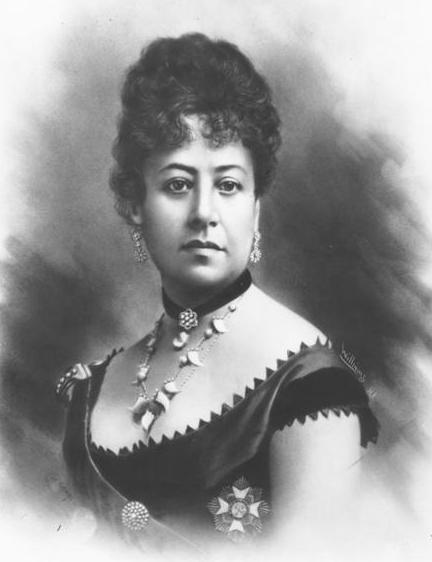
MŌʻĪ KAMEHAMEHA IV (1834-1863) & MŌʻĪ WAHINE EMMA (1836-1885)
Reigned 1855-1863
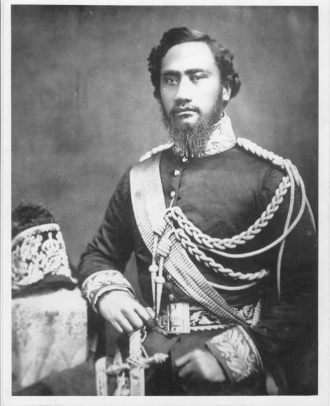
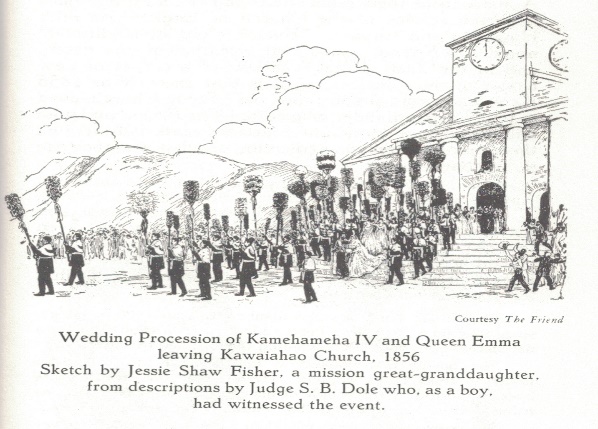
On January 11, 1855, Alexander Liholiho took the oath of office as the fourth ruling monarch of the Kamehameha dynasty at Kawaiahaʻo Church. He married Emma Naea Rooke on June 19, 1856, granddaughter of Kamehameha I, at Kawaiahaʻo Church. By the mid 1800s in response to the Native Hawaiian population’s continued decline from foreign diseases, they established in 1859 what is today known as the Queen’s Medical Center.
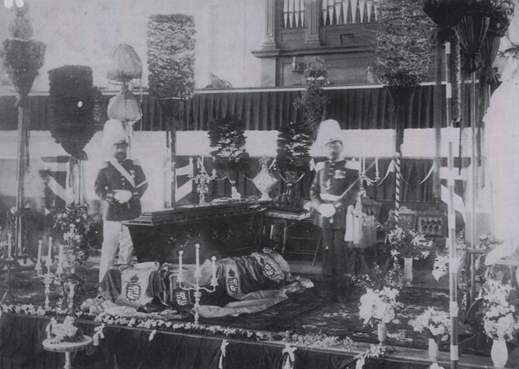
They were influential in establishing the Anglican Church in Hawaiʻi in 1862. They were instrumental in the building of The Cathedral of St. Andrew. Tragically their only child 4-year-old Prince Albert dies in August 1862, and the king dies a year and 3 months later. After King Lunalilo’s death in 1874, widow Queen Emma vies for the Royal Election and loses to King Kalākaua. She dies in April 1885, and her funeral is held at Kawaiahaʻo Church.
MŌʻĪ KAMEHAMEHA V (1830-1872)
Reigned 1863-1872
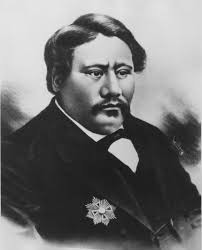
Lot Kapuāiwa Kalanikupuapaikalanainui Kalanimakua Aliʻiōlani.
Mōʻī Lot is best known for his commitment to strengthen Hawaiʻiʻs independance. On July 7, 1864, he convened a Constitutional Convention in the church to establish a new constitution for the kingdom, which remained in effect for twenty-three years until 1887. His motto was ʻOnipaʻa – “remain steadfast.” Realizing the need for a government building, he commissioned the building of Aliʻiōlani Hale to serve as the seat of the judicial and legislative branches of the Hawaiian Kingdom. By royal decree, he established the Royal Order of Kamehameha in honor of his grandfather Kamehameha I in 1865.
Prior to his reign, he served under his brother as Minister of Interior, Minister of Finance and Chief Justice of the Hawaiian Kingdom Supreme Court. The King promoted the growth of the cattle industry in Hawaiʻi and brought the first Japanese laborers to the islands to work in the sugar plantations.
He offered Princess Bernice Pauahi Bishop to be heir to the throne, but she declined. With no successor, the Constitution dictated an election to select the next monarch.
MŌʻĪ WILLIAM CHARLES LUNALILO (1835-1874)
Reigned 1873-1874
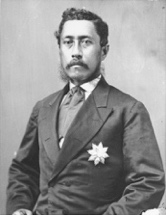
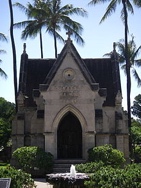
Mōʻī Lunalilo was the 6th monarch of Hawai‘i and the first elected monarch. On January 9, 1873 his coronation was held in Kawaiahaʻo Church. He was known as the people’s king due to his popularity among his people.
From a young age, he loved to write and memorize poetry. In 1860, Mōʻī Lunalilo won a contest sponsored by Mōʻī Kamehameha IV for a composition based on the melody of “God Save the King” which became the first national anthem of the Hawaiian Kingdom.
He worked to provide the Hawaiian sugar industry unhindered and untaxed access to the American market.
Mōʻī Lunalilo established a trust to build Lunalilo Home “to accommodate the poor, destitute and infirmed people of Hawaiian blood with preference given to older people.” This home continues to serve the elder Hawaiian population.
His funeral services were held at Kawaiahaʻo Church where he lay in state, followed by a procession to Mauna ʻAla (the Royal Mausoleum) in Nuʻuanu Valley. By birthright his remains would be at Mauna ʻAla; however, Mōʻī Lunalilo’s dying wish was to be among his people. In 1875, his remains were relocated to their permanent resting place in a tomb built for him and his father, Aliʻi Chief Kanaʻina, at Kawaiahaʻo Church.
MŌʻĪ DAVID KALĀKAUA (1836-1891) & MŌʻĪ WAHINE KAPIʻOLANI (1834-1899)
Reigned 1874-1891
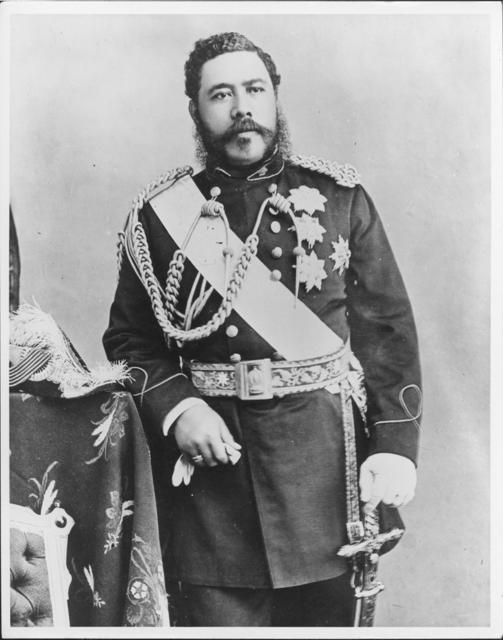
David Laʻamea Kamananakapu Mahinulani Naloiaehuokalani Lumialani Kalākaua was the first of the reigning aliʻi of the Kalākaua dynasty. He has the distinction of having been the guest of honor at the very first “State Dinner” at the White House hosted by President Grant in 1874. He was the first ruling monarch of the world to circumnavigate the globe on a 281-day trip in 1881. He was friends with Thomas Edison and Robert Louis Stevenson. Kalākaua was married to Kapiʻolani Napelakapuokakaʻe, the granddaughter of Aliʻi Nui Kaumualiʻi of Kauaʻi and Niʻihau.
Kapiʻolani, as a regular attendee of Kawaiahaʻo Church-sponsored mission efforts (along with her first husband, Aliʻi Bennet Nāmākēhā) to Micronesia in the 1860s. She attended, along with Princess Liliʻuokalani, Queen Victoria of England’s Jubilee Celebrations as the delegation from Hawaiʻi in 1887. Upon her death, she lay in state at the church.
The royal couple’s shared vision was to increase the well-being of the Kanaka ʻŌiwi (Native Hawaiians), addressing the increasing health problems amongst the native population and high infant mortality. They actively raised funds through a series of concerts held at Kawaiahaʻo church and other locations. Today, Queen Kapiʻolani’s legacy lives through the Kapiʻolani Medical Center for Women and Children.
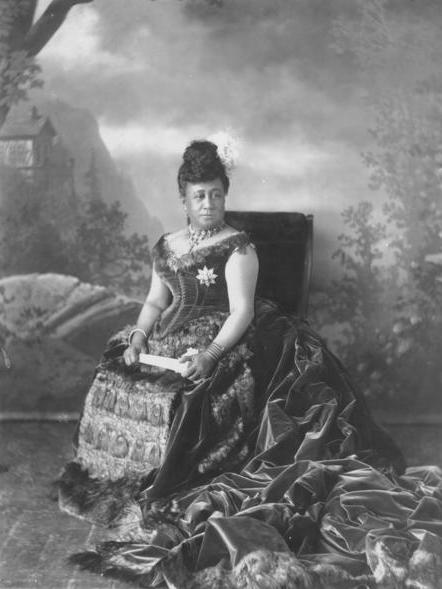
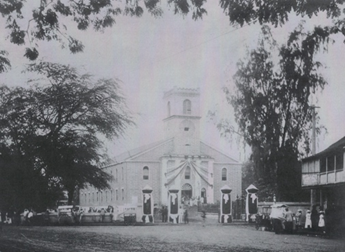
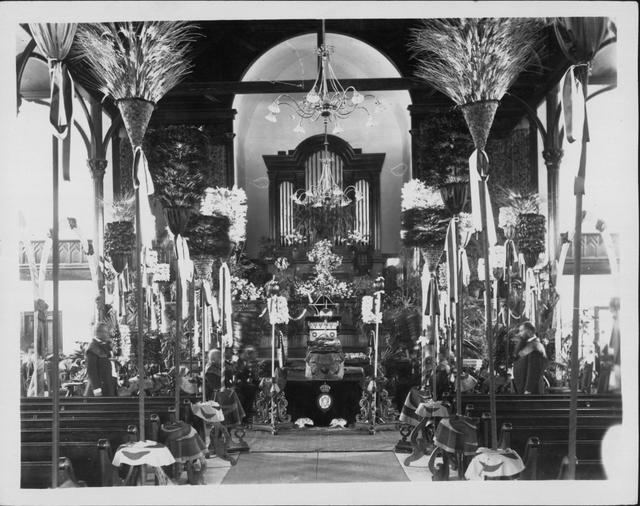
MŌʻĪ WAHINE KAPIʻOLANI’S FUNERAL
Kawaiahaʻo Church 1899
MŌʻĪ LILI`UOKALANI (1838-1917)
Reigned 1891-1893
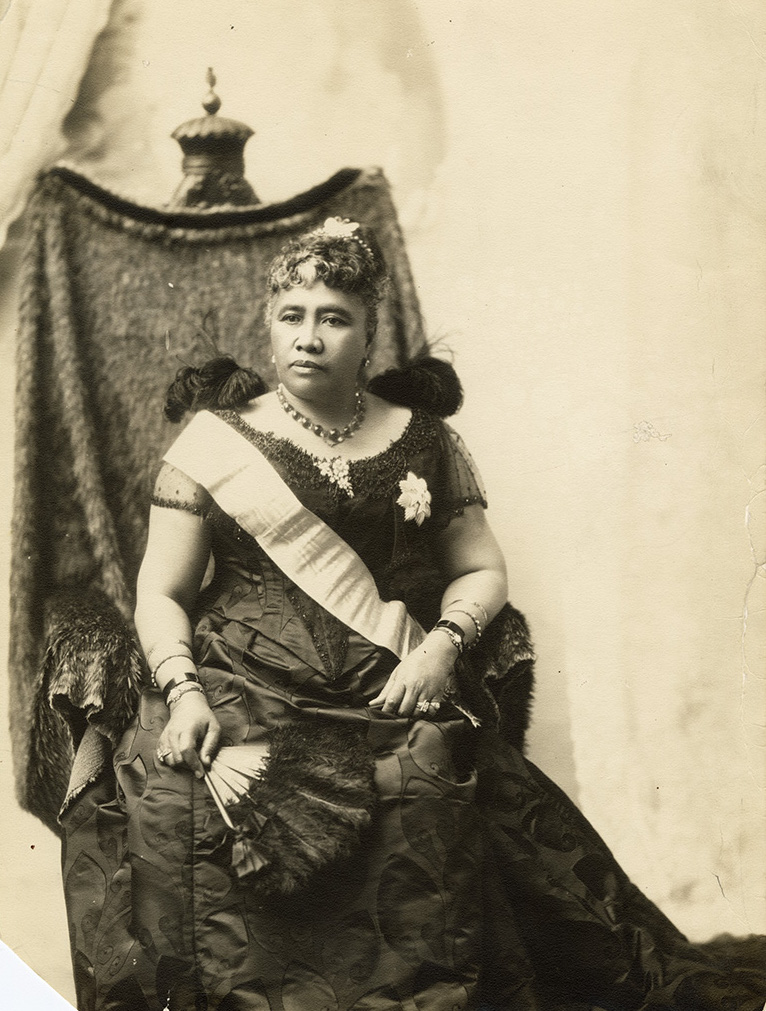
Lydia Liliʻu Loloku Walania Kamakaʻeha, better known by her royal title, Mōʻī Wahine Lili`uokalani, served as Hawaiʻi’s last ruling monarch. Educated at the Chiefs’ Childrenʻs School, she was fluent in ʻŌlelo Hawai`I and English. She was married to American John Owen Dominis who later became governor of Oʻahu.
A gifted composer and talented musician knowledgeable in American music and traditional Hawaiian mele and oli, Liliʻuokalani composed more than 150 songs. This includes the well-known favorite Aloha ʻOe, (“Farewell to Thee”). As a child, like other members of the Royal Family, she attended Kawaiahaʻo Church, later becoming an active member. A faithful and lifelong Christian, she shared her musical gifts with the congregation by playing the pipe organ and singing in and directing the choir
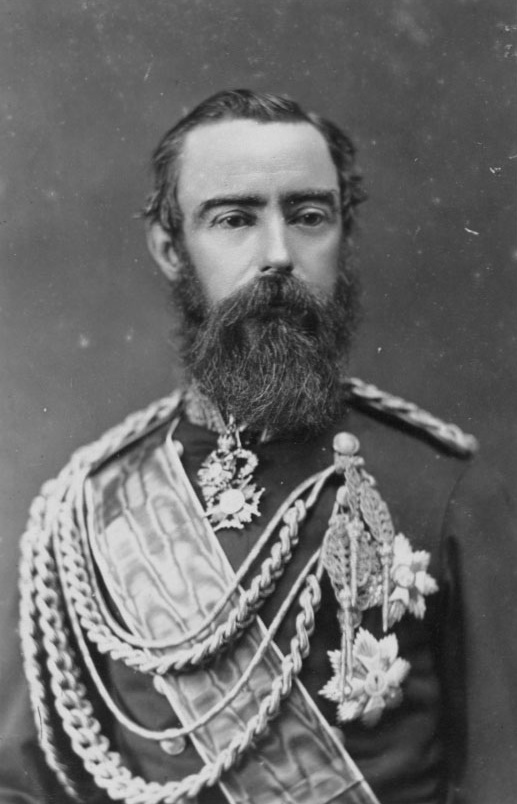
She was commissioned by Mōʻī Kamehameha V to compose the second national anthem He Mele Lahui Hawaiʻi. This anthem was used until 1876 when it was was replaced later by one composed by her brother, Mōʻī Kalākaua.
On January 17, 1893, the Hawaiian Kingdom government is overthrown, and Queen Liliʻuokalani protested the act but decided not to resist to avoid any bloodshed. She felt betrayed by a group of businessmen and some fellow church members including Rev. Henry Parker, pastor of Kawaiahaʻo Church and supporter of the Provisional Government, who refused to support the Queen. The overthrow of the sovereign nation of Hawaiʻi caused great discord among the Kawaiahaʻo Church members for many years.
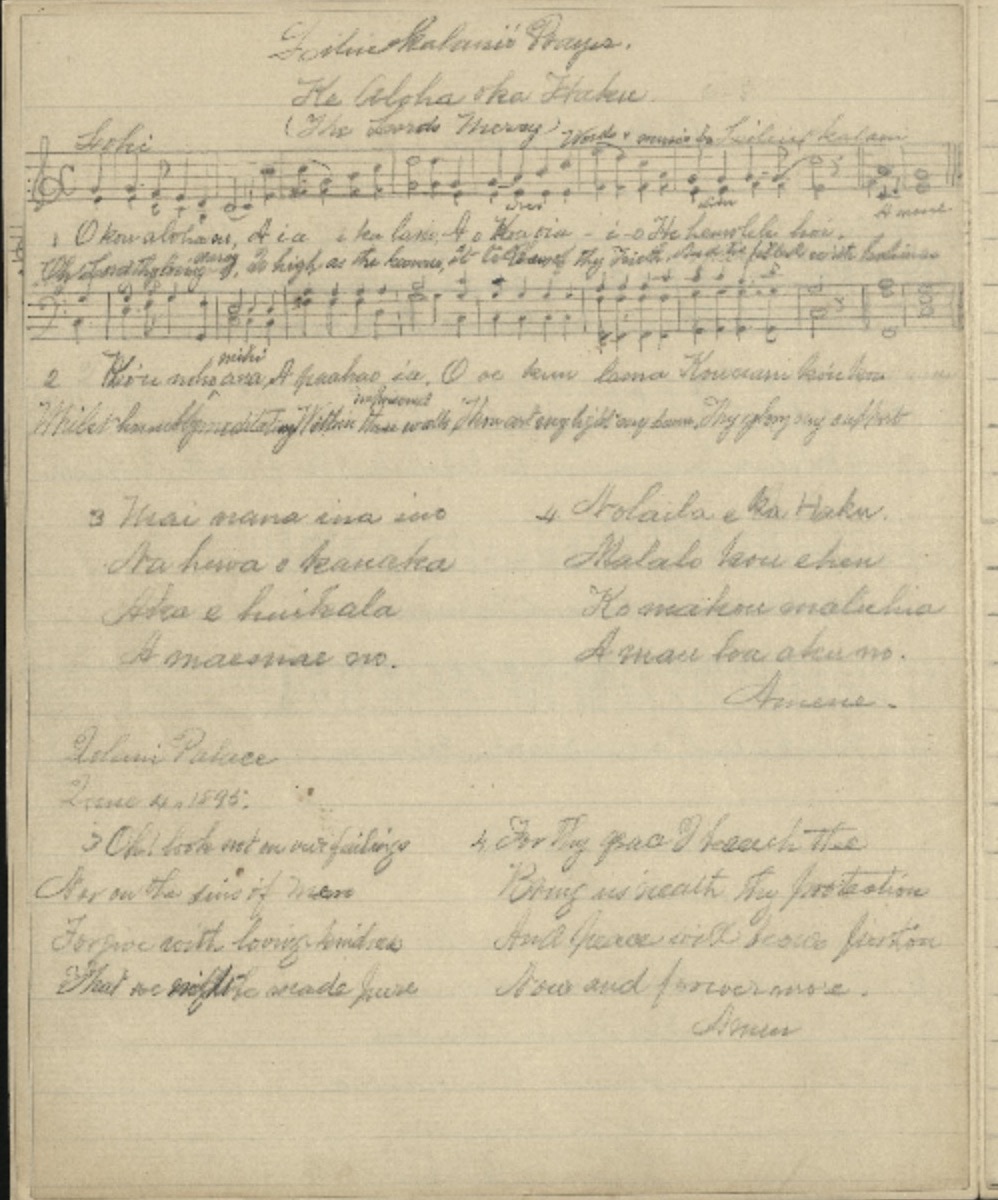
In 1894, the new government leaders declared Hawaiʻi a republic entitled “The Republic of Hawaiʻi”. In 1895, the Queen was accused of knowledge of a plot to overthrow the Republic, imprisoned at ʻIolani Palace, and subsequently placed under house arrest at her home at Washington Place. During this period of turmoil, she held fast to her Christian faith. The Bishop Right Reverend Alfred Willis of The Cathedral of St. Andrew openly supported the Queen and visited her in her home. Consequently, she transferred her membership to the Anglican Church in 1896. She would later write in her memoirs, “It was at this time that Bishop Willis invited me to be confirmed as a member of his church; to which I very gladly assented...”
Ke Aloha o ka Haku, (“the Queenʻs Prayer”), composed seven weeks after being imprisoned and dedicated to her niece Princess Victoria Kai'ulani, reflects her deep love for Ke Akua (for God) and the Queen’s faith in knowing Godly justice would prevail.
In 1909, she established the Lili'uokalani Trust for the welfare of orphaned Hawaiian children, which continues today to provide programs for underserved children and families across all islands.
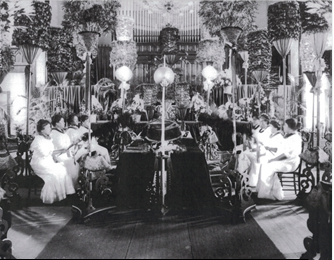
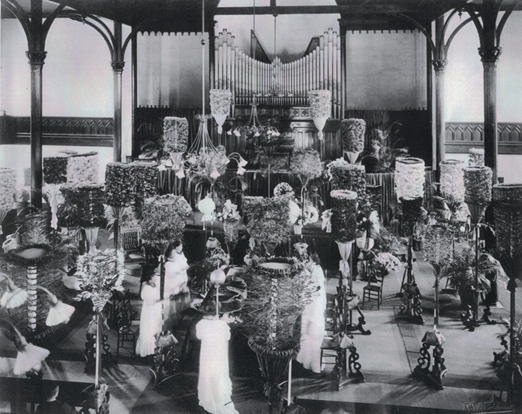
MŌ`Ī WAHINE LILU`UOKALANI FUNERAL
Kawaiahaʻo Church 1917
KE KAMA ALIʻI WAHINE KAʻIULANI
(1875-1899)
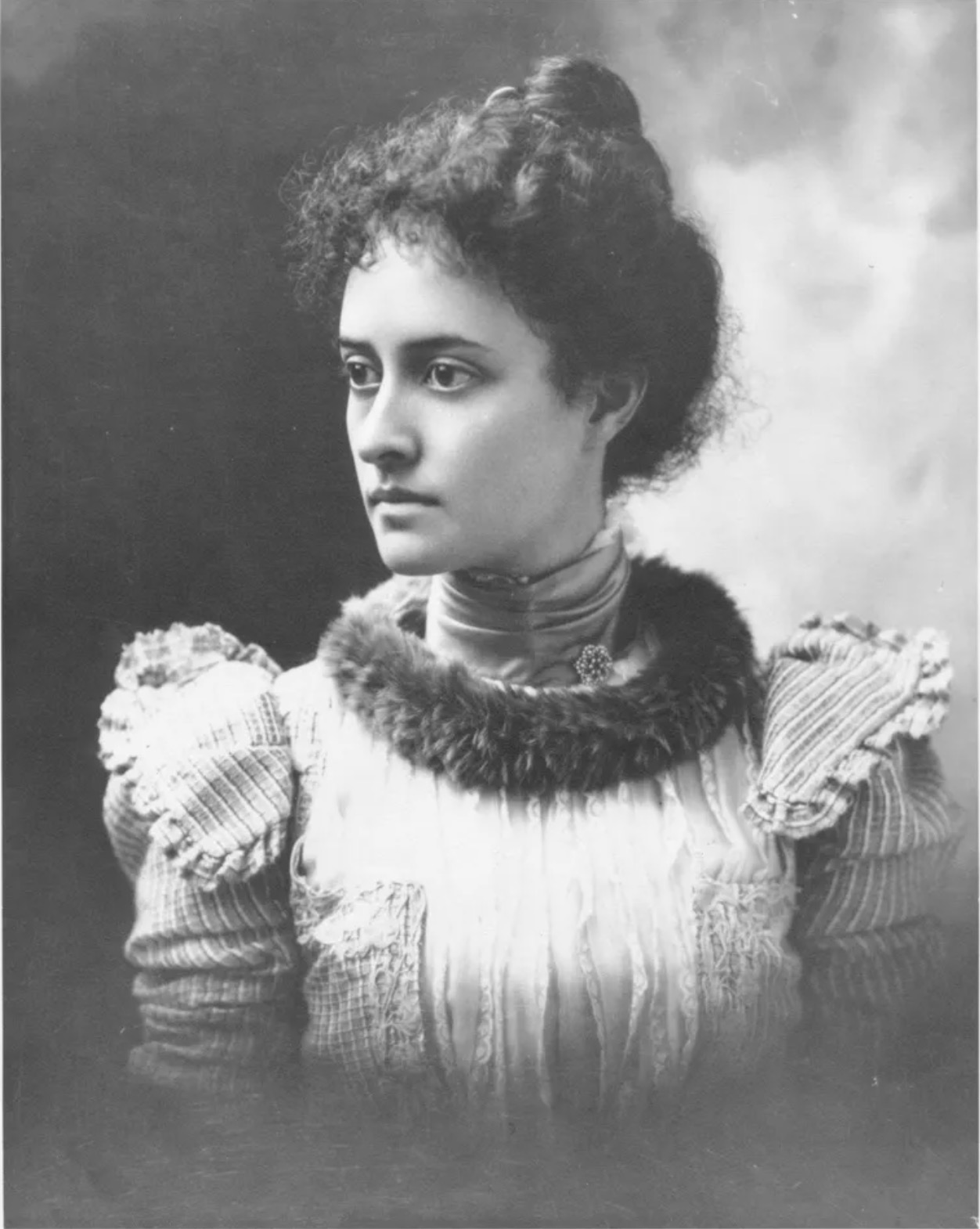
Victoria Kawēkiu Kaʻiulani Lunalilo Kalaninuiahilapalapa Cleghorn. Her name means “highest point in heaven” or “royal sacred one”. Her mother was Princess Likelike, sister of Kalākaua and Liliʻuokalani. She was the heir apparent and expected to become Queen of the Hawaiian Kingdom. She was educated in England (1889-1893) at Harrowden Hall when the overthrow occurred.
Soon after receiving news of the overthrow, she traveled from England to New York City. Upon her arrival from England, she said to the press, “Even now I can hear a wail [the Hawaiian people] in my heart and it gives me strength and courage, and I am strong- -strong in the faith of God, strong in the knowledge that I am right...” From NYC she traveled to Washington DC and met with President & Mrs. Grover Cleveland on March 13, 1893, to petition the case for the restoration of the Hawaiian Kingdom. In the ensuing five years after returning to Hawai`i, she was active in efforts to restore the Kingdom which deeply affected her health, contributing to her death at a young age of 23.
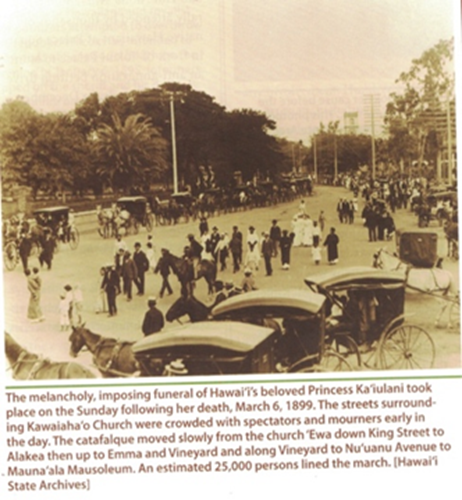
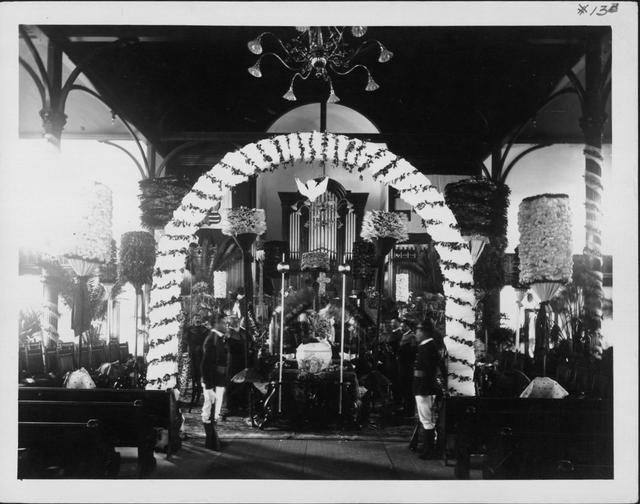
Her funeral was held at Kawaiahaʻo Church with over 20,000 mourners lining the streets of the funeral procession.
KE KAMA ALIʻI WAHINE KAʻIULANI FUNERAL
Kawaiahaʻo Church 1899
Ke Kamaliʻi Kane Jonah Kūhiō Kalanianaʻole
(1871-1922)
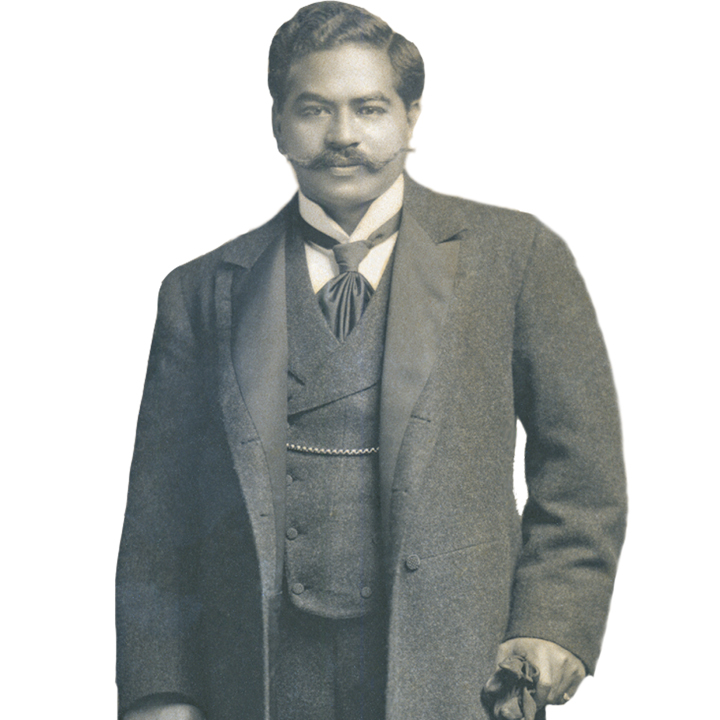
Prince Kūhiō (grandson of Kaumualiʻi, the last ruling chief of Kauaʻi) was adopted (hānai ) by his maternal aunt, Mōʻī Wahine Kapiʻolani. Later Mōʻī Kalākaua declared him and his brothers in line of succession to the throne.
He attended Royal School and O`ahu College (Punahou Schools). In 1890, Kūhiō and his brother David Kawānanakoa were sent to attend schools in California and in the United Kingdom. He studied at the Royal Agricultural College in England before graduating from a business school in England. He married Elizabeth Kahanu Kaʻauwai in 1896.
He went on to become a non-voting delegate, representing the Territory of Hawaiʻi from 1903-1922, to the United States Congress; and due to his popularity, he was re-elected 10 times. He was the only Congressional member of royal lineage.
In 1903 Kūhiō reorganized the Royal Order of Kamehameha I, established in 1871 by Mōʻī Lot Kapuāiwa to honor his grandfather. He was founder of the first Hawaiian Civic Club on Dec. 7, 1918 and the establishment of the Association of Hawaiian Civic Clubs.
His many achievements included involvement in establishing the county government system still in place today. In 1921, he sponsored the Hawaiian Homes Commission Act while in Congress. Prince Kūhiō's intention of the Hawaiian Homes Commission Act was to restore social and economic wellbeing of all Hawaiians and to increase pride in Hawaiian identity and heritage. He also secured congressional funding for Pearl Harbor, the Hawaiʻi National Parks, and sponsored the first statehood legislation.
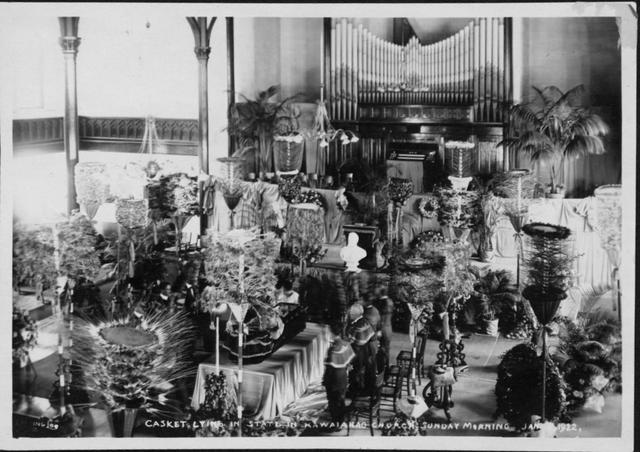
Kūhiō died Jan. 7, 1922, and he lay in state at Kawaiahaʻo Church; his funeral was held at ʻIolani Palace.
PRINCE KŪHIŌ LYING IN STATE
Kawaiahaʻo Church 1922
Ali`i Sundays at Kawaiaha`o Church
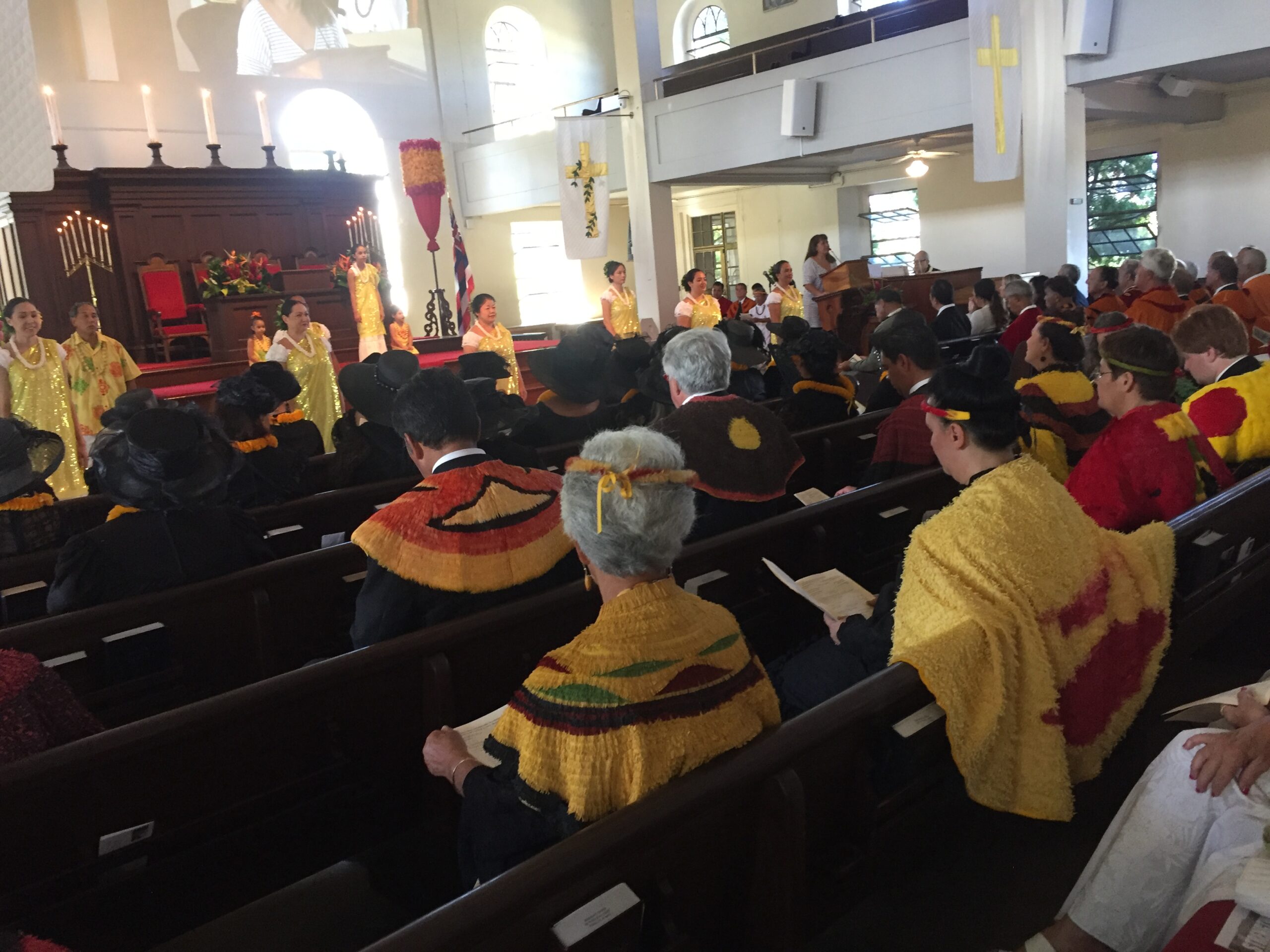
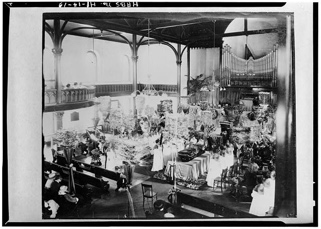
Aliʻi Sundays (celebrating Aliʻi birthdays) are among the many honored traditions of Kawaiahaʻo Church.
Kahu Abraham Akaka, sensing the urgency to unite Hawaiʻi’s people and rekindle their strength and purpose in Ke Akua (God), invited the Benevolent Royal Societies, Aliʻi Trusts and Hawaiian Civic Clubs to Kawaiahaʻo Church. These Aliʻi services became part of the cultural reawakening taking place in Hawaiʻi.
Nine Aliʻi Sundays are celebrated before the birthdays of the Aliʻi: Mōʻī Lunalilo (January); Mōʻī Alexander Liholiho [Kamehameha IV] (February); Mōʻī Wahine Kaʻahumanu and Ke Kamaliʻi Kane Jonah Kūhiō Kalanianaʻole [Prince] (March); Mōʻī Kamehameha Paiʻea [Kamehameha I] (June); Mōʻī Kauikeaouli [Kamehameha III] and Mōʻī Wahine Lili`uokalani (August); Ke Kamaliʻi Wahine Ka`iulani [Princess] (October); Mōʻī Liholiho [Kamehameha II] and Mōʻī David Kalākaua (November); Mōʻī Lota Kapuāiwa [Kamehameha V] and Ke Kamaliʻi Wahine Bernice Pauahi Bishop [Princess] (December).
The Kaʻahumanu Society, the Royal Order of Kamehameha, and several Hawaiian civic clubs have a long-standing association with the church.